If you’ve been researching new windows and doors, chances are you’ve come across both aluminium and timber options. Each has its advocates, and the conversation can get complicated quickly. Rather than steering you straight toward one material, here’s a straightforward comparison across the factors that matter most for homes on the Central Coast.
A Little Context First
Timber windows and doors have been part of Australian homes for well over a century. Aluminium became the dominant material through the latter half of the 20th century and remains so today. Both materials have genuine strengths. However, they don’t perform equally well in all situations, and the coastal environment on the Central Coast adds a layer of consideration that makes the comparison worth working through carefully.
How Each Material Handles the Coastal Environment
This is where the comparison becomes most relevant locally. Salt air, UV exposure, and regular humidity are constant factors here. They affect materials in very different ways.
Aluminium is inherently resistant to corrosion. Furthermore, the powder-coated finish on modern aluminium windows and doors adds additional protection against the elements. Together, they handle coastal conditions reliably without requiring annual treatment.
Timber, by contrast, needs regular sealing, painting, or staining to hold up against moisture and salt air. Skip that maintenance and the timber absorbs moisture, swells, and eventually warps or deteriorates. In a coastal location, that maintenance schedule is considerably tighter than it would be inland.
Maintenance Over Time
Related to the above, but worth addressing separately. Ongoing maintenance requirements differ significantly between the two materials.
Aluminium requires very little. Clean the glass, wipe down the frames, keep the tracks and rollers clear, and lubricate moving parts occasionally. Our guide to caring for your aluminium windows and doors covers the full routine in detail.
Timber demands considerably more attention. Sanding and repainting every few years, treating proactively against rot, adjusting fit as frames swell and contract with seasonal moisture changes, and replacing seals more frequently. The time and cost of that upkeep adds up across the life of the product.
Thermal Performance
Timber is a natural insulator. It transmits heat less readily than aluminium, which is why timber-framed windows have traditionally performed better in extreme climates where retaining warmth through winter matters most.
Modern aluminium frames, however, have significantly closed that gap. Thermal break technology incorporates a non-conductive material into the frame profile, reducing heat transfer substantially. Combined with quality double glazing, a modern aluminium window performs well even in cooler conditions.
On the Central Coast, winters are mild. For most homeowners here, managing heat over summer is a bigger priority than retaining warmth in winter. As a result, this distinction matters less locally than it would in a colder inland region.
Design and Colour Options
Both materials offer genuine design flexibility, though in different ways.
Timber suits certain home styles particularly well. Heritage and period properties often look more appropriate with timber joinery, especially when restoring an older home where authenticity is the priority.
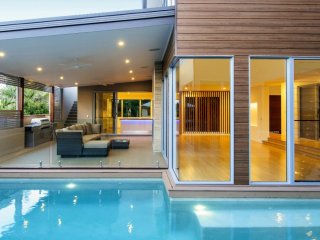
Aluminium, on the other hand, offers a wide range of powder-coated colours and frame profiles. The powder coat holds its appearance without peeling or fading, so the colour you choose at installation is the colour you’ll see a decade later without touching it up. Slim frame profiles also allow larger glass areas, which suits contemporary architectural styles well.
Upfront Cost vs Long-Term Cost
Timber windows and doors are often comparable in upfront cost. However, the ongoing maintenance requirements make the lifetime cost comparison less straightforward than the initial price suggests.
Aluminium may cost more upfront in some product categories. Nevertheless, low maintenance requirements and a long lifespan reduce the total cost of ownership over time. In a coastal environment, where timber demands more frequent attention than it would inland, that long-term comparison tends to favour aluminium further.
So Which One Is Right for Your Home?
For most Central Coast homeowners, aluminium is the more practical choice. It handles the coastal environment reliably, requires minimal ongoing attention, and offers strong flexibility through colour and profile options. Its thermal performance also suits the local climate well.
Timber remains a genuine option for certain heritage properties where authenticity is the priority and where the owner is prepared for the maintenance it requires. For a new build, a renovation, or a replacement project on a contemporary or coastal-style home, however, aluminium is the clear recommendation.
At Windows & More Australia, we specialise in aluminium windows and doors. We offer free, no-obligation measure and quotes across the Central Coast and Newcastle.
Call us on 0499 870 404 or head to our contact page to get started.