
Living near the water has obvious appeal. What’s less obvious, until you’ve owned a coastal property for a few years, is how much the environment affects the things you might not immediately think about. Windows and doors are a good example. Choices that work well for an inland property don’t always translate directly to a home on the Central Coast or in the Hunter region.
Here’s a practical guide to what the coastal environment actually does to windows and doors, and how to make the right decisions for where you live.
What the Coastal Environment Does to Building Materials
Salt air is the most significant factor. It’s not purely about how close you are to the beach. Salt particles travel considerable distances from the ocean and settle on every exposed surface. Over time, salt accumulates against frame seals, gets into track channels, and sits against any material that isn’t properly protected.
Combined with UV exposure and regular humidity, coastal conditions accelerate deterioration in materials that aren’t suited to them. Timber warps and requires frequent treatment. Certain metals corrode. Seals and weatherstripping dry out faster than they would in a more sheltered environment.
The right product choice from the outset is considerably more practical than managing the consequences of the wrong one later.
Why Aluminium Makes Sense on the Coast
Aluminium handles the coastal environment better than the alternatives. It resists corrosion without needing annual treatment, and modern powder-coated finishes add further protection against salt, UV, and moisture.
Furthermore, aluminium stays dimensionally stable across changes in temperature and humidity. Doors and windows continue to operate smoothly regardless of the season. That consistency matters particularly in a coastal environment where humidity can shift considerably across the year. Our post comparing aluminium and timber covers the full material comparison in detail for anyone still weighing up both options.
Product Choices That Suit Coastal Living
Beyond material choice, the specific products you select shape how well your home handles the environment and how well you actually get to enjoy it.
Louvre windows suit coastal homes particularly well. Their blade design allows precise control over airflow, which is valuable where sea breezes are one of the genuine pleasures of daily life. Positioning louvre windows to face the prevailing afternoon breeze makes the most of that airflow through the warmer months.
Awning windows handle light coastal rain well. The outward-opening design creates a canopy over the opening, allowing the window to stay open during passing showers without letting rain in. On the Central Coast, where afternoon showers are a regular summer occurrence, that practical advantage is worth considering room by room.
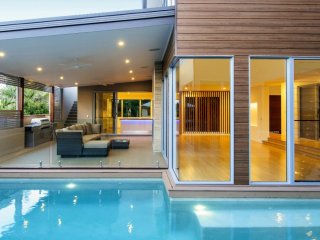
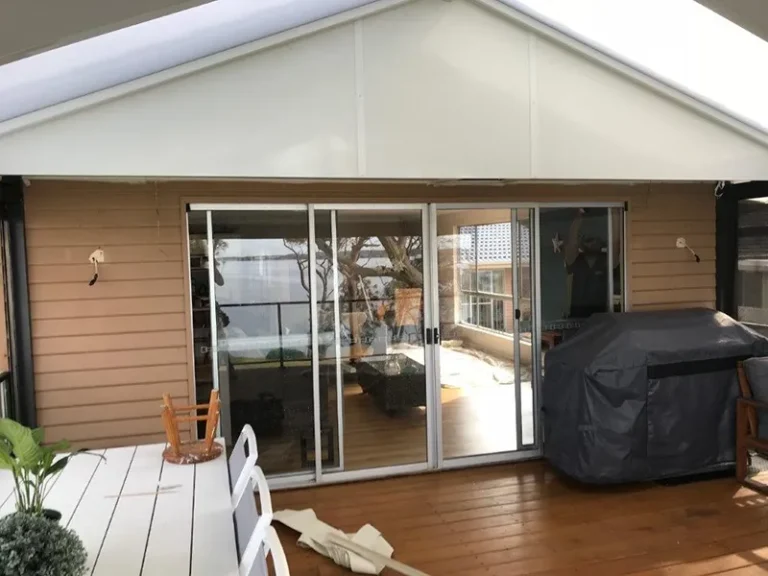
Sliding doors, stacker doors, and bi-fold doors suit the indoor-outdoor lifestyle that coastal living is built around. Wide openings that connect a living area to a deck or alfresco space make a home feel genuinely connected to the outdoors. Stacker doors and bi-fold doors take that connection further by opening more of the wall than a standard sliding door allows.
Security screens deserve particular attention in coastal homes. Leaving windows and doors open through summer is part of the daily routine here. A quality security screen, whether a safety barrier screen or an Invisigard system, means you can leave openings unattended without compromising security. That combination of ventilation and peace of mind is especially relevant in ground-floor bedrooms and main living areas.
Making the Most of the View and the Light
Coastal homes often have an outlook worth preserving. A garden, a bush setting, a glimpse of water, or simply a sense of openness and space. Fixed panel windows are worth considering wherever the view is the priority. A large, unobstructed pane frames an outlook properly in a way that most operable window styles can’t match.
Pairing fixed panels with operable windows alongside them gives you both functions: the glass area for light and view, and the ventilation point when you need a breeze through. That combination works particularly well in living areas where both matter equally.
Maintenance on the Coast
Even with the right products installed, coastal conditions mean maintenance needs to happen more regularly than it would inland. Salt residue builds up on glass and frames faster near the water. Tracks and rollers benefit from more frequent cleaning. Seals should be checked periodically, since UV and salt air accelerate their wear.
Our full guide to caring for your aluminium windows and doors covers the routine in detail. For coastal homes specifically, the key difference is frequency rather than complexity. The same tasks apply. They simply need to happen more often.
Get a Free Measure and Quote
If you’re on the Central Coast, in Newcastle, or in the Hunter region and you’re thinking about new windows or doors, the team at Windows & More Australia understands what the local environment requires.
Call us on 0499 870 404 or head to our contact page to get in touch.