Colour tends to be the last decision homeowners make when replacing windows and doors. It probably shouldn’t be. Frame colour covers more of a home’s surface area than most other elements, and getting it right makes the whole property look more considered and cohesive. Getting it wrong is an expensive thing to live with for the next twenty years.
At Windows & More Australia, colour selection comes up on almost every measure and quote visit we do. Here’s a practical guide to help you approach the decision with more confidence.
Why Frame Colour Has More Impact Than People Expect
Window and door frames appear on every elevation of a home, in every room, and in the transition spaces between inside and out. A well-chosen colour ties the whole property together. One that doesn’t sit right with the rest of the home draws the eye for the wrong reasons.
Powder-coated aluminium frames hold their colour well across the life of the product. They don’t fade, peel, or need repainting the way timber does. That durability is one of the genuine advantages of aluminium. It also means the choice you make now is the one you’ll be looking at for a long time, which is a good reason to take the decision seriously.
The Main Colour Categories and What They Suit
Most aluminium window and door colours fall into a few broad groups. Understanding what each tends to suit makes the decision more manageable.
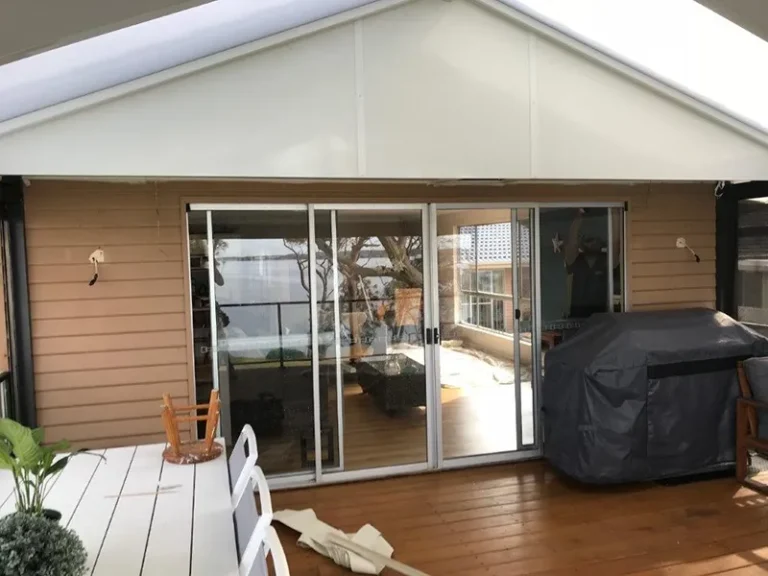
White and off-white. White frames are the most common choice across Australian residential properties and suit a wide range of home styles. On the Central Coast, white works particularly well on coastal and weatherboard-style homes, where it sits naturally against light render and pale cladding. Off-white and cream tones add warmth and work well on older homes where pure white can look stark against heritage materials.
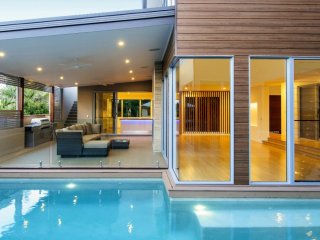
Charcoal and black. Dark frame colours have grown significantly in popularity and suit contemporary home styles well. Against light render or pale cladding, charcoal and black frames create a strong visual contrast that reads as deliberate and considered. They also photograph well, worth noting for anyone preparing a property for sale.
Monument and mid-grey. Mid-range grey tones offer flexibility when neither white nor charcoal suits the home. Monument in particular has become widely used in recent years and works comfortably across a range of architectural styles from modern coastal to more traditional designs.
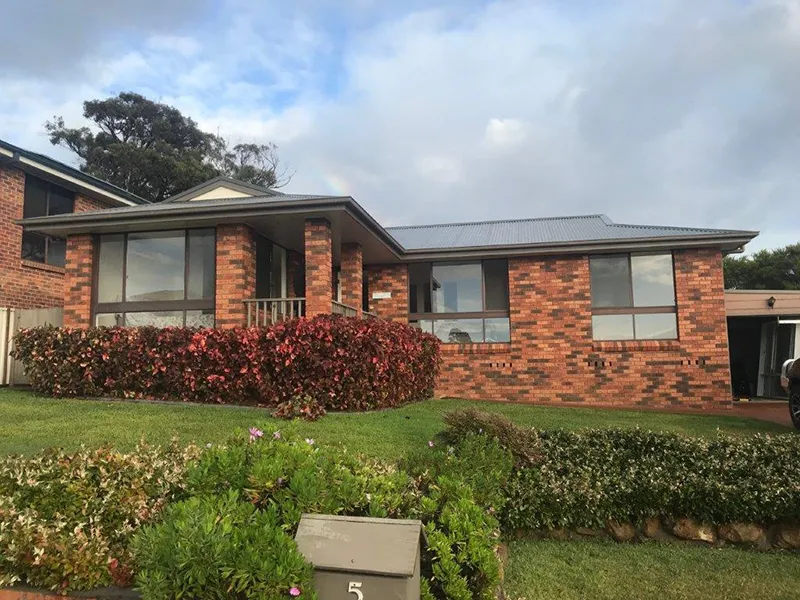
Heritage and earthy tones. Warm bronzes, olive greens, and earthy greys suit character homes and properties with natural material palettes such as timber, stone, or red brick. If your home has a period character or uses warm natural materials, an earthy frame colour tends to sit more harmoniously than white or charcoal would.
Matching Frame Colour to Your Home’s Exterior
Start by looking at the whole façade before settling on a colour. Consider the dominant materials, whether render, brick, weatherboard, or cladding, and note whether they read as warm or cool in tone. Warm-toned exteriors generally suit warm-toned frames. Cool-toned exteriors suit cooler colours.
Look at the roof as well. The roof covers a large area and its colour shapes the overall palette of the home as seen from the street. Frames that relate to the roof colour, rather than working against it, tend to produce a more resolved result.
Consider the gutters and fascia boards too. In most homes, these are already a fixed colour. Getting the window and door frames to align with these elements is a straightforward way to pull the exterior together.
Keep It Consistent Across the Whole Home
One of the most common issues we see is a home where windows and doors have been replaced at different times in different colours. White windows at the front, charcoal sliding doors at the back, and an entry door that doesn’t match either. Each product may look fine individually. Together, the inconsistency detracts from the overall result.
Wherever possible, commit to a single frame colour across the whole home from the outset. If you’re replacing windows and doors in stages because of budget, deciding on the colour upfront and working toward it progressively produces a far better result than choosing what appeals at each stage independently.
Colour Choices for Coastal Homes
On the Central Coast, a few additional factors are worth keeping in mind.
Salt air, UV exposure, and coastal humidity affect finishes more aggressively here than in inland areas. Powder-coated aluminium holds up well in these conditions, but this is another reason to feel settled on your colour choice before committing. Changing frame colours later is not a straightforward process.
Lighter colours, white in particular, show salt residue and coastal grime more visibly than darker tones. Regular cleaning takes care of this easily enough, but it’s a practical consideration for homeowners who prefer low-maintenance exteriors. Darker frames are more forgiving in that respect.
A Few Practical Tips Before You Decide
Look at your colour options in natural daylight. A colour that reads one way on a sample chip or in a showroom can look quite different in the context of your home, particularly at different times of day.
Consider the whole elevation at once. A single window frame in isolation tells you very little. How the colour reads across all the windows and doors on each side of the home is what matters.
Take note of neighbouring properties. You don’t need to match what others have done, but knowing what’s common in your street gives you a useful reference point and helps you understand what stands out for good reasons rather than bad ones.
If you’re genuinely undecided between two colours, our team is happy to talk it through during the measure and quote visit. We work across the Central Coast and Newcastle and see a lot of homes in a wide range of styles, so we can give you a considered opinion based on what we’ve observed working well in different contexts.
Once you’re settled on a colour and ready to move forward, take a look at our guide to what happens once you confirm your order so you know exactly what to expect from that point.
Get in Touch
Ready to start planning new windows and doors for your home? Contact Windows & More Australia for a free, no-obligation measure and quote.
Call us on 0499 870 404 or head to our contact page to get in touch.