If there’s one window style that genuinely suits the Central Coast lifestyle, it’s louvre windows. They’re designed around airflow control, and in a region where afternoon sea breezes are part of daily life through much of the year, that’s a significant advantage.
At Windows & More Australia, we supply and install aluminium louvre windows across the Central Coast, Newcastle, and the Hunter region. Here’s everything worth knowing about how they work and where they perform best.
How Do Louvre Windows Work?
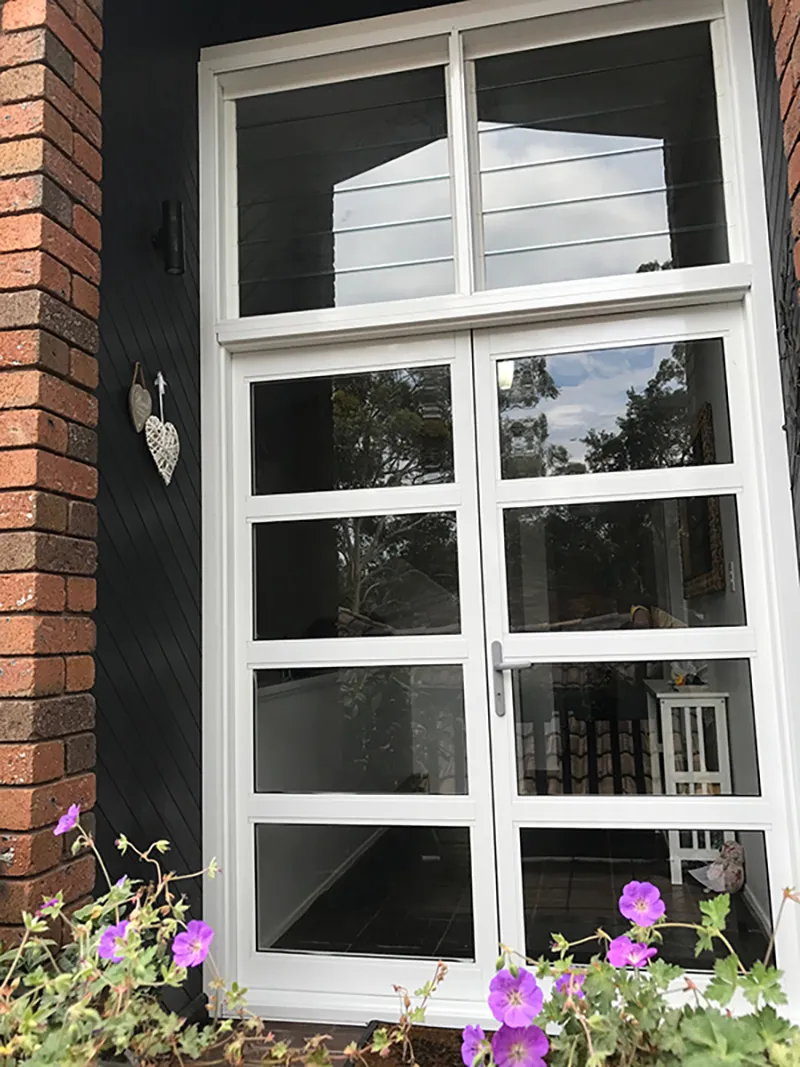
Louvre windows are made up of a series of horizontal glass blades fitted into a frame, which tilt open simultaneously using a winding mechanism. When you turn the handle, all the blades adjust together, giving you control over how much the window opens and at what angle. Fully open, they allow a large amount of air through the opening. Partially open, you can direct airflow upward or downward depending on what the room needs.
That level of control sets louvre windows apart. A sliding window is open, closed, or somewhere in between. A louvre lets you fine-tune the airflow to suit the room and the conditions outside.
Why They Work Well on the Central Coast
Afternoon sea breezes are one of the things people enjoy most about living on the Central Coast. Cooling the house down naturally, reducing reliance on air conditioning through summer, making evenings on the back deck worth sitting on. Getting that breeze into your home efficiently is worth thinking about when choosing window styles.
Louvre windows are particularly good at capturing and directing breezes. Because the blades can be angled, you can push airflow downward into the room, toward floor level where you actually feel it. In a bedroom or sunroom, that kind of control makes a real difference on warm nights.
They also perform well in rooms where cross-ventilation is the goal. With louvre windows on two facing walls, adjusting the blade angle on each side lets you draw air through the space more effectively than most other window styles allow.
Where Louvre Windows Work Best
Bedrooms. The ability to fine-tune airflow without opening a wide gap makes louvres a practical fit for bedrooms, particularly at ground level. Screens can be fitted, and because the opening is more controlled than a standard sliding window, the security profile is reasonable for the ventilation you get in return.
Sunrooms and alfresco spaces. Louvre windows suit semi-outdoor rooms well. In spaces designed to feel connected to the outside, the high level of ventilation they provide adds to that effect rather than working against it.
Bathrooms and laundries. Good airflow in wet areas helps manage moisture and odour. Frosted glass blades are available for privacy, making louvre windows a practical and discreet option in these spaces.
Rooms facing the prevailing breeze. If you have a room that faces the afternoon sea breeze and you want to make the most of it, louvre windows are the most effective way to do that.
Maintenance and Longevity
Aluminium louvre frames are low maintenance. They don’t need painting or sealing, and the powder-coated finish handles coastal conditions well without significant upkeep. The winding mechanism benefits from light lubrication periodically to keep it running smoothly, but that’s about the extent of it.
Cleaning the glass blades is a little more hands-on than cleaning a fixed pane, since each blade needs wiping individually. Most homeowners fold this into their regular window cleaning routine without any issue.
If a blade cracks or chips over time, individual blades can usually be replaced without needing to replace the full frame, which keeps the long-term cost reasonable.
A Few Practical Things to Know
Louvre windows are not as airtight as other window styles when closed. Because the blades fit together rather than sealing completely, there’s more air movement through a closed louvre than through a closed sliding or awning window. On the Central Coast, where winters are mild and the priority is usually cooling rather than insulating, this is generally a minor point. In rooms where keeping warmth in is a higher priority, it’s worth factoring in.
Screens for louvre windows are purpose-built for the style, since the blades need to tilt behind them. Standard fly screens don’t work on a louvre frame. We’ll confirm the right screen type during the measure and quote visit.
Get a Free Measure and Quote
If you’re considering louvre windows for a renovation or new build on the Central Coast or in Newcastle, the team at Windows & More Australia is here to help.
Call us on 0499 870 404 or head to our contact page to send a message. We’ll come out, take measurements, and give you a clear picture of what works and what it will cost.