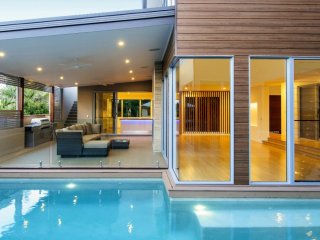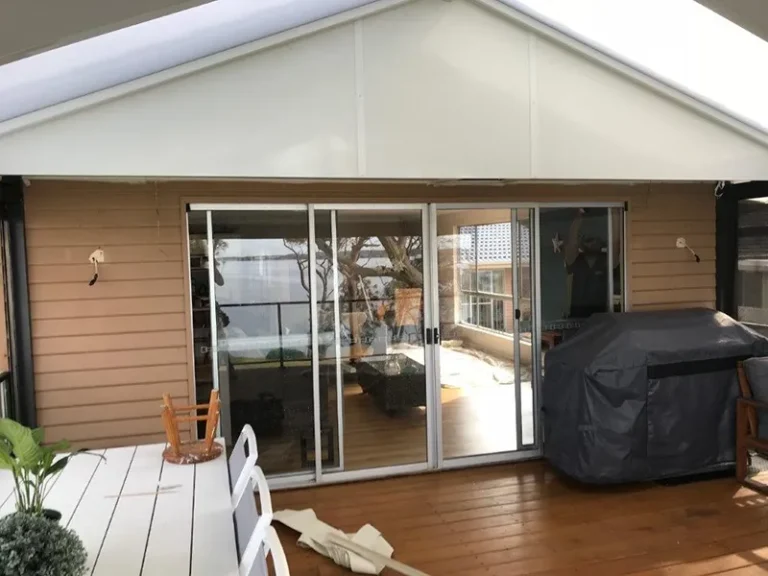
Not every door needs to be a statement piece. But when a door can do its job well and genuinely add something to how a space looks and feels, it’s worth taking seriously. French doors are one of those options. They bring in light, create a visual connection between spaces, and suit a wide range of home styles from older character properties to contemporary coastal builds.
At Windows & More Australia, we supply and install aluminium French doors across the Central Coast, Newcastle, and the Hunter region. Here’s what’s worth knowing before you decide.
What Are French Doors?
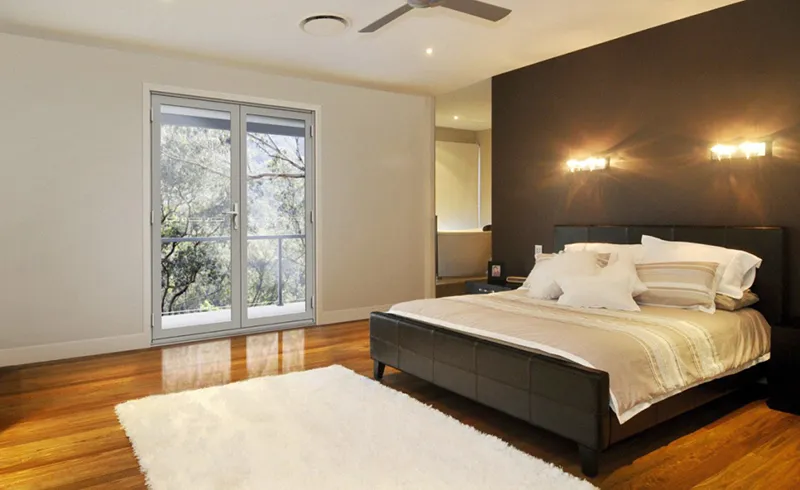
French doors are a pair of full-height panels that hinge on opposite sides of a frame and open from the centre. Both panels typically carry a substantial glass area, which allows natural light into the space and creates a visual line through the opening even when the doors are closed.
Most configurations allow one panel to be held in place with a floor bolt while the other operates as the everyday entry point. When both panels are swung fully open, the entry is clear and the space between inside and out feels genuinely open.
Why Aluminium Makes Sense in the Coastal Climate
Timber-framed French doors have a traditional appeal, but aluminium has practical advantages that matter on the Central Coast.
Aluminium doesn’t swell in humidity or contract in dry conditions the way timber can. Over time, this makes a difference to how cleanly the doors open and close. A timber frame that absorbs moisture through summer can become stiff and inconsistent to operate. Aluminium stays stable.
Maintenance requirements are lower too. Powder-coated aluminium holds its finish without annual painting, sanding, or sealing, which matters for a door that’s exposed to salt air and UV through the year.
Slimmer frame profiles are another advantage. Because aluminium is strong enough to carry large glass panels without bulky frames, more of the door area is glass. For French doors, where light and visual connection are part of the appeal, that’s worth considering.
Where French Doors Work Well
From a living area to an outdoor entertaining space. French doors suit this transition particularly well in homes where the outdoor area is used regularly and the flow between inside and out matters to how the home feels. Both panels opening fully clear of the entry creates a wide, unobstructed connection that suits alfresco dining and entertaining.
Between an internal hallway and a living room. Used internally, French doors can section off spaces without making a home feel broken up or dark. The glass area keeps light moving through while providing acoustic separation and a visual distinction between rooms.
On a courtyard or smaller outdoor area. Where the opening is more contained and you want the door to contribute something to the character of the space, French doors suit the scale better than a multi-panel sliding or bi-fold configuration.
As a front entry. French-style entry doors create a strong first impression. Paired with side lites on either side of the frame, they suit wider entry points and work particularly well on homes with a traditional or classic character.
Glass Options
French doors carry a significant glass area, so the glass type affects both the look and the performance.
Clear glass suits most applications where privacy isn’t a concern. Tinted or low-e glass reduces heat and glare for doors that receive direct sun. Double-glazed units improve insulation and reduce noise, worth considering for front entries or doors facing a road or neighbouring property. Frosted or patterned glass adds privacy without blocking light entirely, useful for internal applications or entries where the view straight into the home isn’t ideal.
Practical Things to Sort Out Early
Swing direction. French doors can swing inward or outward. Outward-swinging doors require clearance on the exterior. Inward-swinging doors are more common in Australian homes, but the right choice depends on your layout and what makes the most sense for the space.
Hardware. French doors typically have a multi-point locking system on the active panel and a floor bolt on the inactive panel. The quality of the hardware matters to both security and how smooth the doors feel to use every day. We’ll walk you through the hardware options during the quote visit.
Clearance for the swing arc. Unlike a sliding or bi-fold door, French doors need clear space on each side for the panels to open into. This is worth mapping out before you commit to the configuration.
Get in Touch
If you’re looking at French doors for a project on the Central Coast or in Newcastle, the team at Windows & More Australia is happy to help. We offer free, no-obligation measure and quotes.
Call us on 0499 870 404 or head to our contact page to send a message.